
By the Hydrosphere Restoration Pros team · Updated
Mold remediation in Katy, TX means finding the moisture that fed the growth, removing moldy materials under containment, and cleaning the area back to normal background levels. When growth covers 25 contiguous square feet or more, Texas requires a TDLR-licensed mold remediation contractor to do the work, and that is the only kind of contractor we send on mold calls.
Call (831) 303-1192 any hour if you smell must after a leak or see spotting on drywall. We don’t test for mold or write assessments. We explain where the licensed assessor fits in, connect you with a licensed remediator, and make sure the water problem behind the mold gets fixed.
Signs of mold after a leak or flood
Mold rarely starts as a big black patch. In Katy homes it usually starts as a smell: a damp, earthy odor in a closet or under the upstairs laundry that doesn’t clear when the AC runs.
- A musty smell that gets stronger when the air handler kicks on, which can point to attic mold around the unit, the drain pan or the ductwork
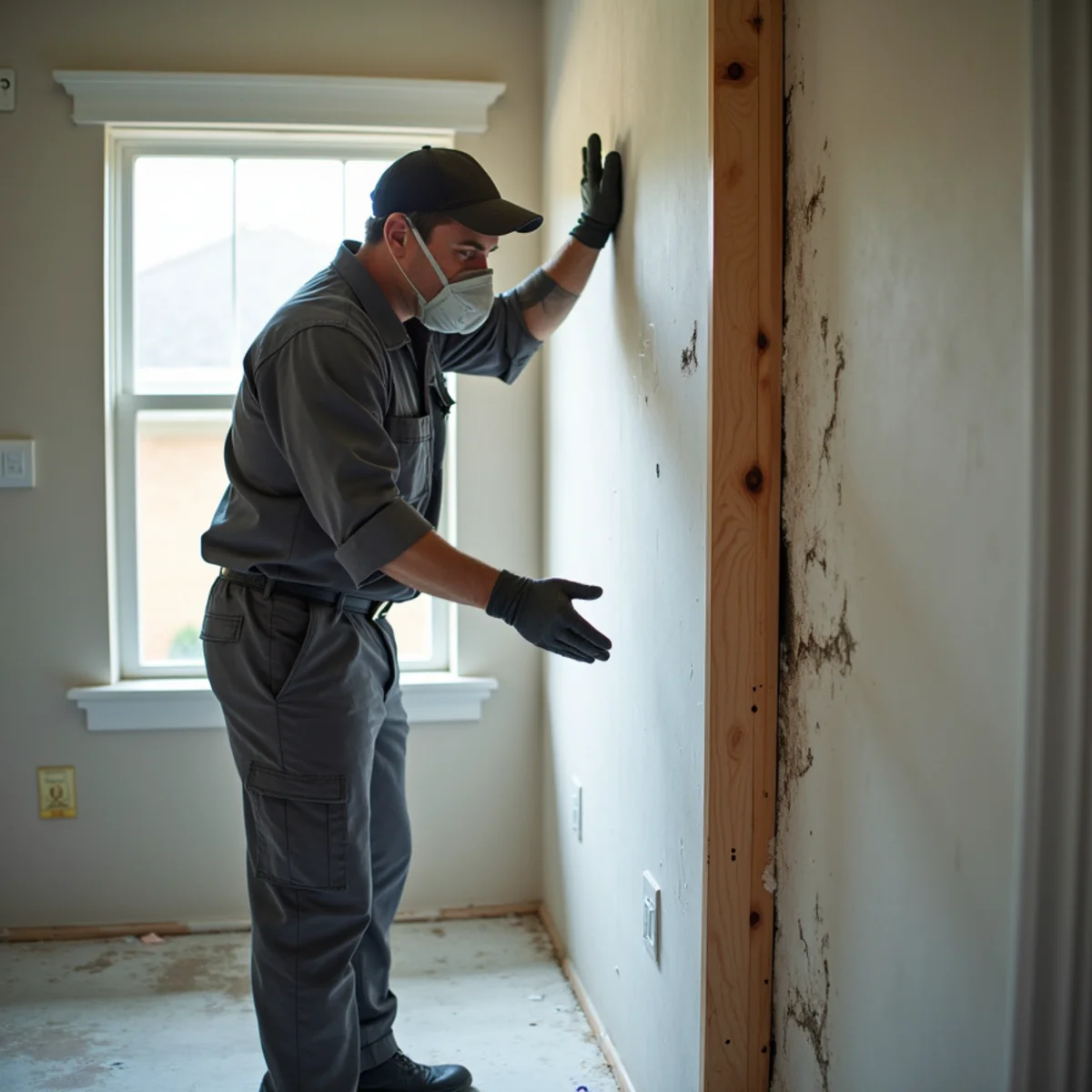
- Gray, green or black spotting along the bottom of drywall, on baseboards, or behind furniture pushed against an exterior wall
- Bubbling paint, soft drywall, or a stain that spreads after a leak was “fixed”
- Swollen cabinet bottoms or toe-kicks under a sink or dishwasher
Color doesn’t tell you the species or the risk. Black mold removal follows the same containment and removal steps as any other growth of that size. What matters is how much there is and whether the material is still wet. Hidden mold in walls is common after a slow leak, because the back of the drywall stays damp long after the painted side looks dry.
Why mold moves fast in Katy: Gulf humidity, slab homes, attic air handlers
EPA guidance is to dry wet building materials within 24 to 48 hours to prevent mold. Around Katy that window is tight: dew points sit in the 70s for much of the year, and a wet wall with the AC off during an outage can grow mold within days.
Local construction makes mold after water damage more likely:
- Slab-on-grade floors. Water under carpet pad or vinyl plank sits on slow-drying concrete, and drywall wicks it upward.
- Attic air handlers and water heaters. Many two-story homes, including newer builds in Cane Island and Elyson, keep this equipment in the attic. A clogged condensate line can soak ceiling insulation for weeks before a stain shows downstairs.
- Storm and freeze history. Harvey in 2017, the February 2021 freeze and Hurricane Beryl in 2024 left wet wall cavities across the area. Some were painted over, and the mold turns up years later during a remodel.
If the leak is fresh and nothing is growing yet, fast water extraction and structural drying is the cheapest prevention there is. See how fast mold grows after a leak in Houston-area humidity.
Texas mold rules: TDLR licensing, the 25-square-foot line, and why the assessor and the remediator are separate
Texas regulates mold work under Chapter 1958 of the Occupations Code, and the Texas Department of Licensing and Regulation (TDLR) has run the program since it moved from the Department of State Health Services in 2019. The rules turn on job size and on who does which part.
- The 25-square-foot line. Remediation of mold covering 25 contiguous square feet or more of surface area must be done by a TDLR-licensed mold remediation contractor. Below that, a license is not required.
- Assessment comes first. A TDLR-licensed mold assessment consultant inspects the home and writes the mold remediation protocol: the affected areas, how they will be contained and cleaned, and the criteria the work must meet to pass.
- Two different license holders. The same license holder cannot both assess and remediate one project, so whoever measures the problem is not the one paid to remove it.
- Remediation follows the protocol. The licensed remediator works from the assessor’s protocol and notifies TDLR before starting.
- Clearance by the assessor. The assessor, not the remediator, confirms the finished work passes.
Jobs under 25 contiguous square feet are exempt from licensing but still deserve care. Follow EPA guidance: fix the water first, wear an N95 respirator and gloves, bag moldy porous material, and never dry-brush growth into the air. More in our guide to Texas mold remediation rules and the 25-square-foot line.
| Situation | Who you need | Why |
|---|---|---|
| Musty smell after a recent leak, no visible growth | A drying crew; a licensed assessor if the smell stays | Testing is the assessor’s job |
| Visible growth under 25 contiguous sq ft | No license required; follow EPA guidance or hire a remediator | Exempt from licensing |
| Growth of 25 contiguous sq ft or more | A licensed mold assessment consultant, then a separate TDLR-licensed remediation contractor | Required by Texas law |
| Growth found inside walls during water cleanup | Pause demolition; a licensed assessor sizes it | Hidden growth is often larger than it looks |
We do not offer mold testing or mold assessment. We send mold remediation work only to TDLR-licensed mold remediation contractors. You can verify any contractor’s license with the TDLR license search on the agency’s website.
The remediation process: containment, negative air, HEPA filtration, removal and cleaning
Licensed mold removal in Katy, TX follows the assessor’s protocol, and most protocols draw on the IICRC S520 standard for professional mold remediation.
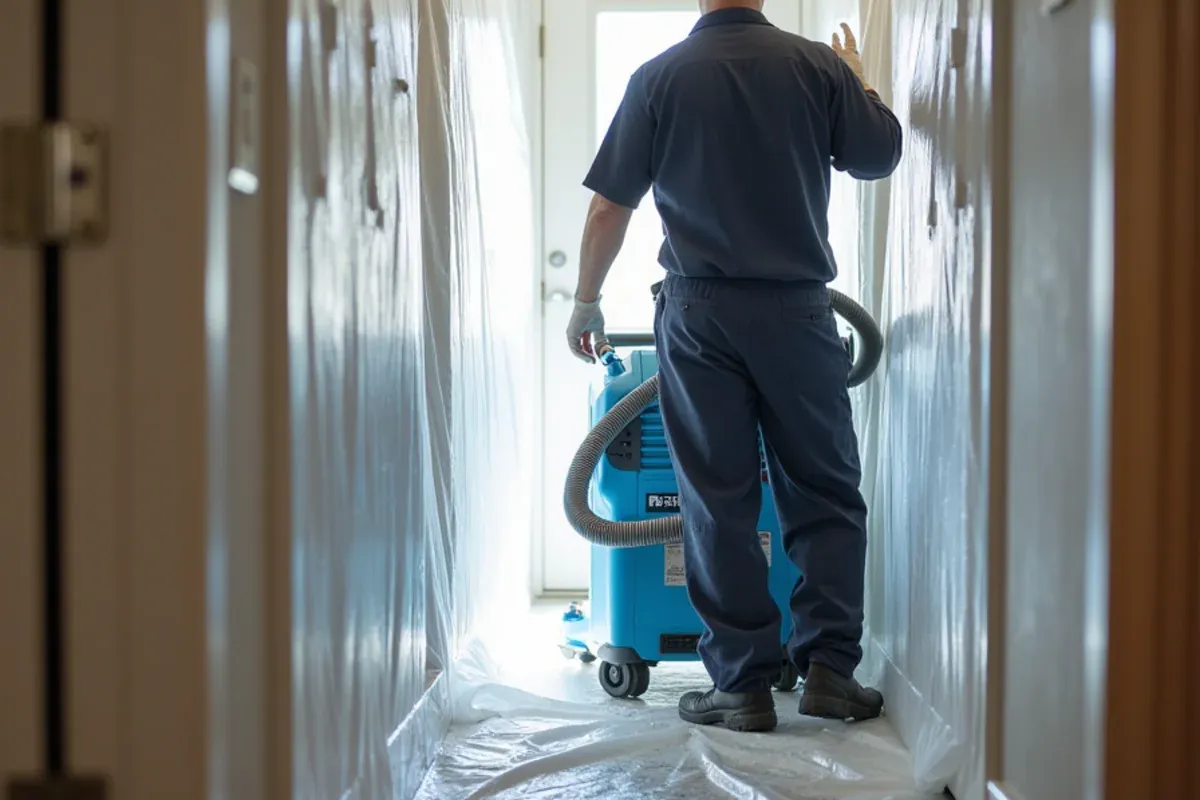
- 1Containment. The crew seals the area with 6-mil plastic, a zipper door and taped seams, and closes the vents so spores don’t ride the ductwork.
- 2Negative air. A HEPA air scrubber exhausts air from the containment, keeping it at lower pressure so air flows in, not out.
- 3Removal of damaged porous materials. Moldy drywall, insulation, carpet pad and baseboards are cut out and bagged inside containment. Framing is cleaned rather than replaced unless it has lost strength.
- 4Cleaning. Surfaces are HEPA-vacuumed and damp-wiped. An antimicrobial may follow cleaning, never replace removal.
- 5Drying. Dehumidifiers bring framing to normal moisture readings before anything is closed up.
No honest contractor promises mold is gone forever; spores are a normal part of indoor and outdoor air. The goal of mold cleanup is to remove the growth, return the area to normal background levels, and keep it dry.
Fixing the moisture source first
Remediation without a repaired water source is money spent twice. Find and stop the water before containment goes up.
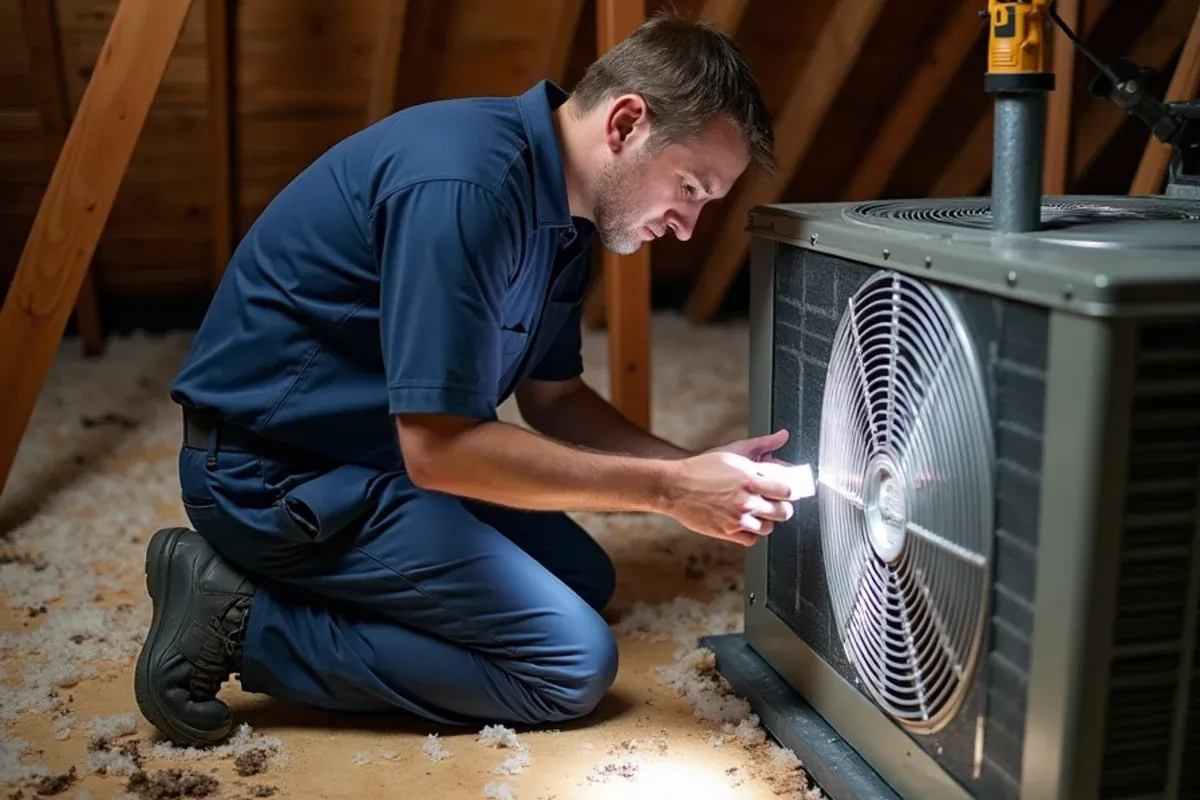
- Attic condensate lines, drain pans and float switches on the air handler
- Supply lines to toilets, ice makers and upstairs washers (see burst pipe and leak water damage)
- Roof and window leaks from wind-driven rain, a common source after Beryl
- Creek or street floodwater, which needs flood damage cleanup first
A plumber, roofer or HVAC technician may need to go first; document the source with photos and readings.
Clearance and the Certificate of Mold Damage Remediation
After cleaning, the licensed assessor returns for the post-remediation assessment: a visual inspection and moisture checks, plus air or surface sampling if the protocol calls for it. When the area meets the protocol’s clearance criteria, containment comes down and rebuilding can start.
Once a licensed project passes clearance, a Certificate of Mold Damage Remediation is issued for the property. Keep it with your house records. It matters when you sell: Texas requires a seller to give the buyer copies of certificates issued for the property in the previous five years.
Mold and homeowners insurance in Texas
Coverage depends on the policy and the cause. Many Texas policies exclude mold or cap it low, yet may pay when mold followed a sudden, covered water loss such as a burst supply line. Mold from long-term seepage or humidity is usually excluded. Read the mold section of your policy; the carrier decides coverage.
What helps any claim is a paper trail: photos, moisture readings, the protocol, an itemized scope and the clearance report. We don’t negotiate claims or promise coverage.
What affects mold remediation cost
The licensed remediator prices the job once the assessor defines the scope, so we don’t quote figures by phone.
The same rules apply across our Katy-area service areas, from two-story Cinco Ranch homes with attic water heaters to newer Fulshear builds with upstairs laundry rooms and older homes and rentals in Brookshire.
What’s included in mold remediation
- For 25 contiguous square feet or more: a TDLR-licensed mold remediation contractor working from the independent assessor’s written protocol, with its own work plan
- The notice licensed remediators file with TDLR before a project starts, generally at least five days ahead except in emergencies
- Containment with plastic sheeting and sealed vents, and negative air through HEPA-filtered air scrubbers
- Removal of moldy porous materials such as drywall, insulation and carpet pad, bagged inside containment
- HEPA vacuuming and damp-wiping of framing and hard surfaces, and cleaning of surface growth on wood
- Drying and moisture verification, with the leak, condensate line or humidity problem fixed first
- Coordination with the assessor’s post-remediation clearance, and the Certificate of Mold Damage Remediation once the project passes
Why choose Hydrosphere Restoration Pros for mold remediation
TDLR-licensed remediators only
Mold calls go only to contractors licensed by the Texas Department of Licensing and Regulation. You can check any license yourself on the TDLR license search.
No testing sales pitch
Texas bars one license holder from assessing and remediating the same project. We do not sell mold testing, so the assessor who judges the job is never the crew that did it.
Moisture first, then mold
Remediation without fixing the leak or the AC condensate problem brings the mold back. The water side of the job is our specialty, so the source gets found and dried first.
A person answers, insured crews show up
Call (831) 303-1192 any hour. Every restoration technician we send is licensed where Texas requires it, and insured.
What moves the cost of mold remediation
We don't publish prices we can't stand behind. The technician walks the job, takes readings and gives you an itemized scope before work goes past emergency protection. These are the factors that set the number:
- Total square footage of affected surfaces, and whether it crosses the 25-contiguous-square-foot licensing line
- Where the growth is: an open wall is simpler than an attic or a cavity behind cabinets
- How much drywall, insulation, carpet pad or cabinetry has to come out
- Containment size and days of negative air and HEPA filtration
- Whether the air handler, ductwork or other HVAC parts are affected
- The licensed assessor’s separate fees for the protocol and the clearance visit
- Repairs to the moisture source by a plumber, roofer or HVAC technician, plus rebuilding after clearance
More detail: what water damage restoration costs in Katy, TX.
Mold Remediation around Katy, TX
Mold calls come from every Katy ZIP code, 77449, 77450, 77493 and 77494, and most start with water we can trace. Attic air handlers and condensate lines in Cinco Ranch two-stories, tight new-build envelopes in Fulshear, aging supply lines under 1980s cabinets in Mission Bend, rental units where the landlord has to approve the work in Brookshire, and flood-soaked walls near the Brazos in Richmond each start mold in a different place.