
By the Hydrosphere Restoration Pros team · Updated
Sewage backing up into a tub, toilet or floor is a health hazard, not a mopping job. Keep people and pets away from it, stop using water in the house, and call (831) 303-1192. We dispatch an insured restoration crew for sewage cleanup: contain the area, remove the sewage and contaminated materials, disinfect and dry.
Under the IICRC S500 standard, sewage is Category 3 water, the same class as floodwater. It carries bacteria, viruses and parasites that household cleaners and a shop vacuum do not deal with, and what looks like a small spill on tile has often already soaked into grout, baseboards and the bottom edge of the drywall.
Warning signs of a sewer backup starting
A main-line blockage usually announces itself before sewage comes up through a floor drain. If you notice these, stop running water and call a plumber before it turns into a cleanup:
- Toilets that gurgle or bubble when the washing machine drains or a tub empties
- Water rising in the shower or tub when a toilet is flushed, usually at the lowest fixture in the house
- Several drains slowing down at once instead of one sink at a time
- A sewer smell from floor drains, the laundry standpipe or the yard around the cleanout
- Water or waste around the outdoor cleanout cap after heavy rain
- Backups that show up during or right after a storm, a sign the main is overloaded rather than your line
Why a sewage backup is a health emergency, not a mopping job
Raw sewage can carry E. coli, hepatitis A and other pathogens that spread through skin contact, splashes and contaminated dust. Young children, older adults, pregnant women and anyone with a weakened immune system face the most risk and should stay out of the affected area until cleanup is complete.
- Stop running water anywhere in the house: no flushing, showers, laundry or dishwasher. With the line blocked, every gallon you use comes back up.
- Turn the HVAC off if the backup is near a return vent, so contaminated air is not pulled through the ducts.
- Skip the household vacuum and the fans. Both spread contamination instead of removing it.
- Wash skin that touched sewage right away, and bag any clothing that got splashed.
Our article on whether it is safe to stay in the house after a sewage backup answers the questions most families ask in the first hour.
Common causes here: root-blocked laterals, grease clogs, sewers overloaded by heavy rain
The lateral is the pipe that carries everything from your house to the public sewer main. Around Katy that main belongs to the City of Katy or, in many subdivisions outside city limits, to a municipal utility district (MUD). A backup starts in one of those two places, and knowing which one matters later.
- Tree roots: live oaks and other trees push roots into pipe joints. In the pre-1980 homes of Old Katy, original drain lines may be clay or cast iron, which roots and age attack first.
- Grease and wipes: cooking grease hardens inside the line and “flushable” wipes snag on it. This happens even in brand-new homes, including 2010s sections like Elyson.
- Sagging pipe: Gulf Coast clay swells in wet months and shrinks in drought, and a lateral can settle enough to hold waste in a low spot.
- Overloaded sewer mains: in heavy rain, stormwater leaks into sanitary sewers through cracks and loose manhole covers. The main can surcharge and push sewage back up the lowest drain in the house, often a ground-floor shower or tub.
If sewage came up during a storm along with water from outside, the job overlaps with flood damage cleanup. Either way, a licensed plumber should clear and camera the line so the backup does not return the day after cleanup.
Containment, extraction and removal of contaminated materials
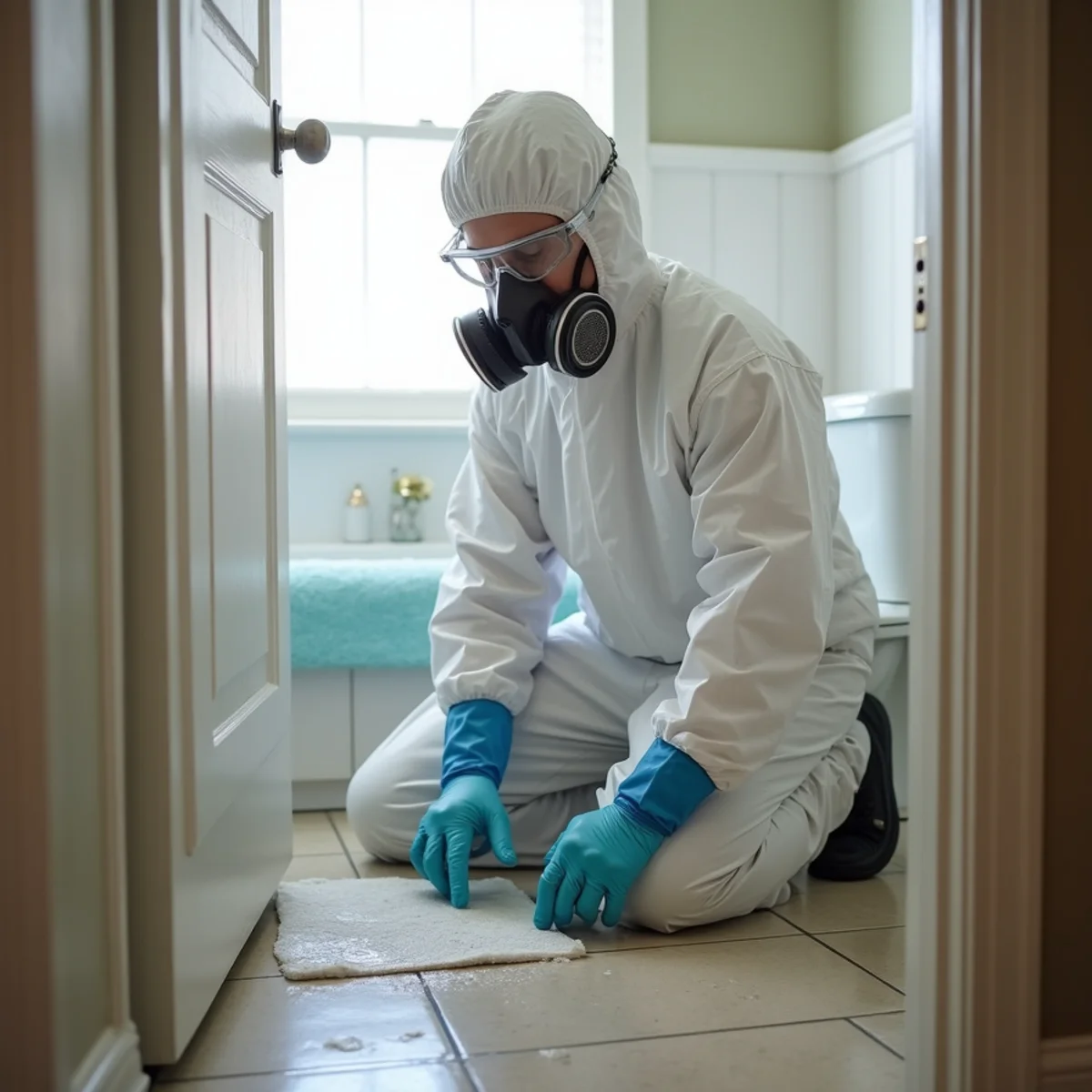
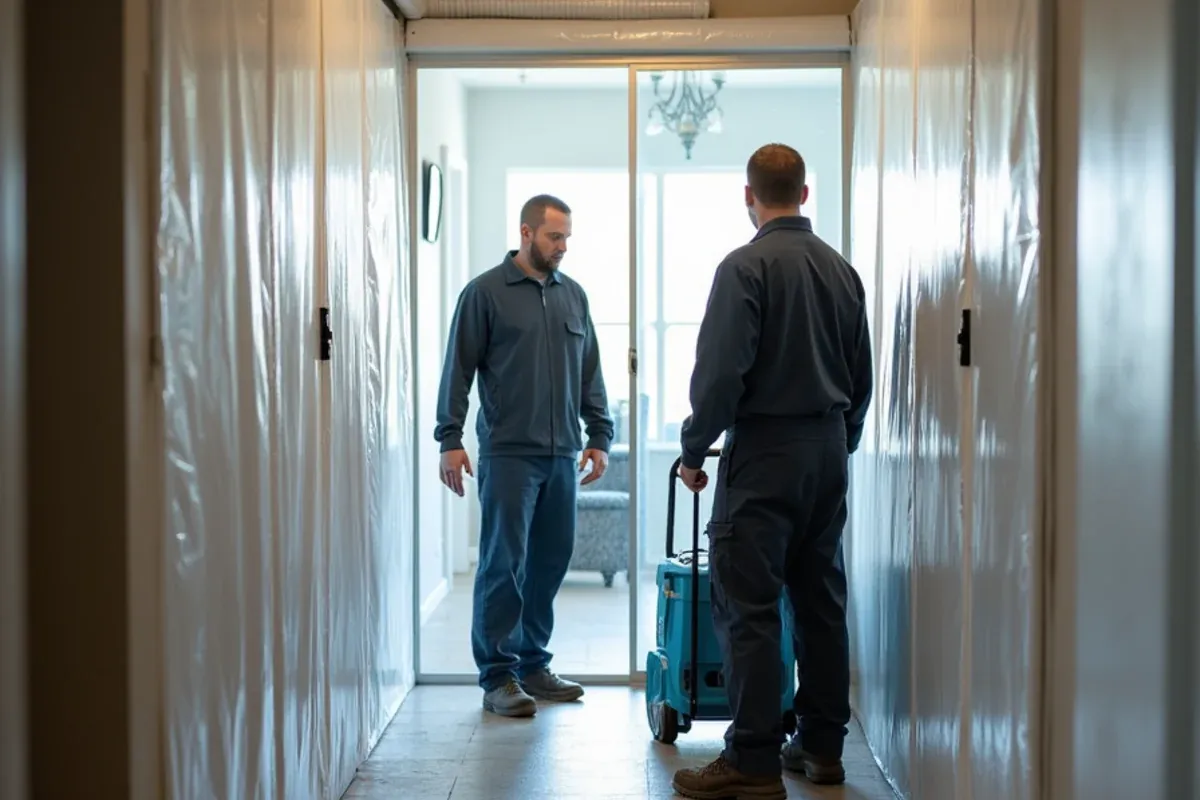
The crew starts by sealing the affected area with plastic sheeting. On larger backups they set up negative air with HEPA air scrubbers, so contaminated air is drawn out of the work zone instead of drifting into clean rooms. Technicians wear protective suits, gloves, boots and respirators, and they set one path in and out that keeps the rest of the house clean.
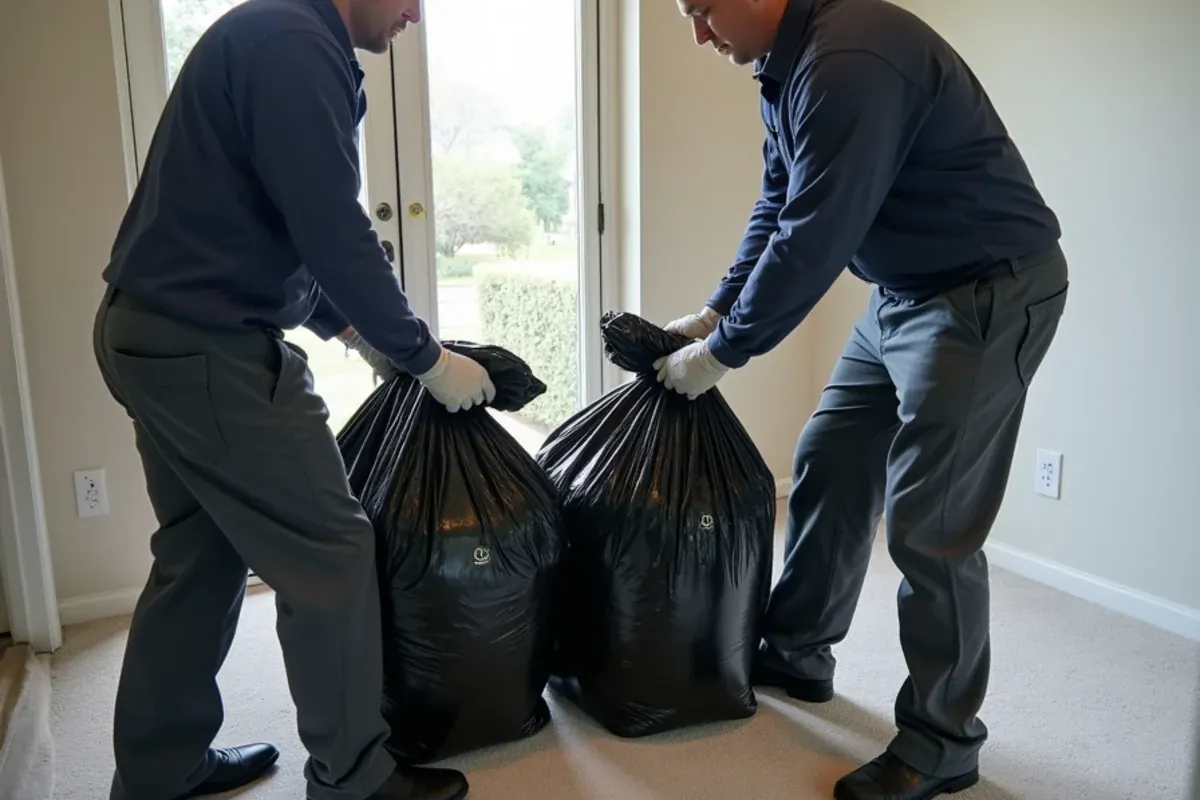
Then the sewage comes out. Standing waste and water are extracted into sealed tanks, solids are removed, and porous materials the sewage touched are cut out and bagged: carpet and pad, drywall above the wet line, insulation, baseboards and particleboard cabinet bases. Removed materials are photographed and listed for your claim before disposal.
Cleaning and disinfecting hard surfaces, then drying
Everything left in the work area is cleaned twice: first to physically remove residue, then with a disinfectant suited to sewage. Tile, sealed concrete, studs, bottom plates, tubs and fixtures are scrubbed, rinsed and treated. Spraying disinfectant over sewage-soaked carpet or drywall without removing it does not work, and a competent crew will not try.
Only then does drying begin. Air movers and dehumidifiers are set much as they would be for a clean leak, with moisture readings logged daily until framing and slab are dry. Our page on water extraction and structural drying explains that stage in more depth.
What can be saved after a sewage backup and what cannot
| Material or item | Usually | Why |
|---|---|---|
| Carpet and pad | Removed | Porous fibers hold sewage and cannot be reliably disinfected |
| Drywall and insulation in the wet area | Removed | Paper facing and insulation soak up contamination |
| Tile, sealed concrete, porcelain fixtures | Cleaned and kept | Non-porous surfaces can be disinfected |
| Wood studs and bottom plates | Cleaned, treated and dried | Framing can be cleaned when sewage is removed quickly |
| Particleboard cabinets and vanities | Often removed | Swells and wicks contamination into the core |
| Upholstery, mattresses, soft toys | Discarded | Too porous to disinfect |
| Hard plastic, metal and glass items | Cleaned | Can be washed and disinfected |
Items with sentimental value can sometimes be cleaned by a contents specialist, depending on how long they sat in sewage. Photograph everything before it is thrown out.
Toilet and tub overflows on a second floor
An upstairs toilet that overflows with waste is a sewage job even when the water on the floor looks clear, and in a two-story Katy home it rarely stays upstairs. It soaks through the subfloor into the ceiling drywall below and drips from light fixtures and vents onto the first floor. That lower ceiling has to be treated as contaminated too.
The fix usually means removing the wet section of downstairs ceiling and its insulation, cleaning the joists from below and drying the subfloor from both sides. A supply line that bursts behind the tank is different: that is clean water, handled like a leak. Tell the dispatcher which it was.
Insurance: the sewer backup endorsement many Texas policies need
Many Texas homeowners policies exclude water that backs up through sewers or drains unless the policy includes a sewer or water backup endorsement, an add-on many owners never bought. If sewage came in with floodwater from outside, it may fall under flood insurance instead. Read your declarations page or ask your agent; the carrier decides coverage.
Cost depends on the factors listed on this page: how far the sewage spread, what had to be removed and how long drying ran. The crew’s part is documentation: dated photos, a list of removed materials, moisture readings and the drying log. For the common exclusions, see does homeowners insurance cover water damage in Texas.
We handle sewage calls across Katy and the communities around it: two-story homes in Cinco Ranch, newer utility-district subdivisions in Fulshear, and older homes and rentals in Brookshire, where tenant and landlord need to agree quickly on who calls. If sewage is still coming up, our 24/7 emergency water damage page lists what to do right now.
What’s included in sewage cleanup
- Coordination with a licensed plumber to clear the line, because cleanup cannot finish while it is still backing up
- Containment with plastic sheeting and negative air so contamination does not spread to clean rooms
- Crew protective gear, then extraction of standing sewage and water
- Removal and bagging of porous materials the sewage touched: carpet, pad, drywall above the wick line and swollen cabinetry
- Cleaning and disinfection of hard surfaces with an EPA-registered disinfectant, plus HEPA vacuuming
- Drying with daily moisture readings, and odor control once the source material is gone
- Photos, a list of what was removed and the moisture record for a sewer backup endorsement claim
Our sewage cleanup process
- 1Stop the flow. Everyone stops using water, and a licensed plumber clears the blockage in the drain or lateral.
- 2Contain and protect. The affected rooms are sealed off, and kids, pets and anyone vulnerable stay out.
- 3Extract and remove. Standing sewage is extracted, then carpet, pad, drywall and other porous materials it reached are cut out and bagged.
- 4Clean and disinfect. Hard surfaces, framing and the slab are cleaned, disinfected and HEPA-vacuumed.
- 5Dry and verify. Air movers and dehumidifiers run with daily readings until materials reach dry targets.
- 6Final walk-through. You get the photos, removal list and readings before rooms go back into use.
Why choose Hydrosphere Restoration Pros for sewage backup cleanup
We don’t pretend to be plumbers
Clearing the line is plumbing work; cleaning up after it is ours. We tell you which call to make first and line up the cleanup behind the plumber so no time is lost.
Category 3 protocol every time
Containment, protective gear, removal of porous materials and disinfection, because a small-looking spill on tile has usually wicked into grout and drywall.
Records that fit the endorsement
Sewer backup coverage is often a separate endorsement with its own limit. Photos, a removal list and moisture readings make that claim easier to review. We document; the carrier decides.
Answered 24/7, handled by insured crews
A backup at midnight gets a person on the phone at (831) 303-1192. Every restoration technician we send is licensed where Texas requires it, and insured.
What moves the cost of sewage backup cleanup
We don't publish prices we can't stand behind. The technician walks the job, takes readings and gives you an itemized scope before work goes past emergency protection. These are the factors that set the number:
- Square footage the sewage reached, and whether it spread into another room or down to a lower floor
- Containment setup, negative air and HEPA air scrubbers
- Volume of sewage and solids to extract and dispose of
- Materials removed: carpet, pad, drywall, insulation, cabinets and flooring
- Cleaning and disinfecting of framing, slab and fixtures
- Drying days and equipment after disinfection
- Ceiling removal and cleaning below an upstairs overflow
- Contents disposal, or specialist cleaning of salvageable items
More detail: what water damage restoration costs in Katy, TX.
Sewage Backup Cleanup around Katy, TX
Who owns the sewer main depends on where you live, and that matters when a backup starts on their side. The City of Katy runs sewer inside city limits, while much of the Katy area, Cinco Ranch included, is served by municipal utility districts. Fulshear runs its own city utility, Brookshire is served by the Brookshire Municipal Water District, Mission Bend relies on MUDs such as Mission Bend MUD 2 and North Mission Glen MUD, and Richmond’s older core is on city wastewater. We clean up the house either way; your utility is who you call about the main.