
Mold
Texas Mold Rules Explained: TDLR Licenses, Assessments and the 25-Square-Foot Line
By Hydrosphere Restoration ProsUpdated 7 min read
The short answer
In Texas, mold assessment and remediation are regulated by the Texas Department of Licensing and Regulation (TDLR). For hired mold work covering 25 contiguous square feet or more, a licensed assessor writes the protocol, a separate licensed remediation contractor does the work, and the assessor confirms clearance. Owner-occupants doing their own work are generally exempt.
This article explains the rules in plain language. It is not legal advice. Rules change, so confirm current requirements with TDLR, and ask TDLR or a Texas attorney about your own situation.
Who regulates mold work in Texas
The Texas Mold Assessment and Remediation Rules are administered by TDLR. The program moved there from the Department of State Health Services (DSHS) in 2019, so any contractor site that still says “DSHS licensed” is out of date. The statute is Texas Occupations Code chapter 1958, and the detailed rules sit in Title 16 of the Texas Administrative Code, chapter 78.
The rules exist for two reasons. Mold work done badly spreads spores through a house, and the person who tests for mold has different incentives from the company paid to remove it. Texas handles both with licenses and a strict separation between the two roles.
The four individual license types
- Mold assessment consultant: inspects, evaluates and samples, writes the mold remediation protocol and performs the post-remediation assessment.
- Mold assessment technician: gathers samples and data for assessments, with a narrower scope of practice than a consultant.
- Mold remediation contractor: plans and supervises removal, cleaning and containment, and writes the work plan.
- Mold remediation worker: does the hands-on removal and cleaning under a licensed contractor.
Companies doing this work also hold company licenses, and laboratories that analyze mold samples are licensed separately. Every one of them can be checked on TDLR’s online license search by name or license number.
The 25-square-foot line
Licensing turns on size. Assessment and remediation of mold covering less than 25 contiguous square feet of total surface area are exempt from licensing. At 25 contiguous square feet or more, a hired company must be licensed. For scale, that is a 5-by-5-foot patch, or a band of drywall 2 feet high running about 12 feet along a wall.
Contiguous means one continuous area. Mold inside a wall cavity or behind a cabinet is often larger than the stain on the paint, which is why a measurement taken after the wall is opened can push a project over the line.
The owner-occupied exemption
A homeowner doing mold assessment or remediation on the home they own and live in is generally not required to hold a license, whatever the size. That exemption covers you, not the people you hire. If you pay a company for work on 25 square feet or more, that company needs the license. A few other narrow exemptions exist, including some for owners and employees of certain residential properties, so landlords should read TDLR’s exemptions or ask TDLR before starting.
| Situation | Licensing needed |
|---|---|
| You clean a small patch (under 25 contiguous sq ft) in your own home | None. Follow EPA cleanup guidance and fix the moisture source first. |
| You remove 25+ sq ft yourself in the home you own and live in | Generally exempt as the owner-occupant. No Certificate of Mold Damage Remediation is issued for unlicensed work. |
| You hire a company for mold under 25 contiguous sq ft | Not required by the size rule, though many owners still choose licensed firms. |
| You hire a company for mold of 25+ contiguous sq ft | A licensed assessor writes the protocol and clears the job; a separate licensed remediation contractor does the work. |
| You hire someone to inspect or sample for mold | A licensed mold assessment consultant or technician when the work falls under the rules; the lab is licensed too. |
| A landlord or property manager handles the work | Special exemptions may apply to some owners and employees; check TDLR’s rules before starting. |
Why the assessor and the remediator must be different
Texas does not let the same person or company perform both the mold assessment and the mold remediation on the same project. The assessor defines the problem and later judges whether it has been fixed, so the rule keeps that judgment independent of the company earning money from the removal. A company offering to test your home and then remove what it finds does not fit the rules for a regulated project.
It is also why Hydrosphere Restoration Pros does not offer mold testing or assessments. We send mold calls only to TDLR-licensed remediation contractors, and you hire your own licensed assessor. Our mold remediation service page walks through how that works in the Katy area.
How a regulated mold project runs
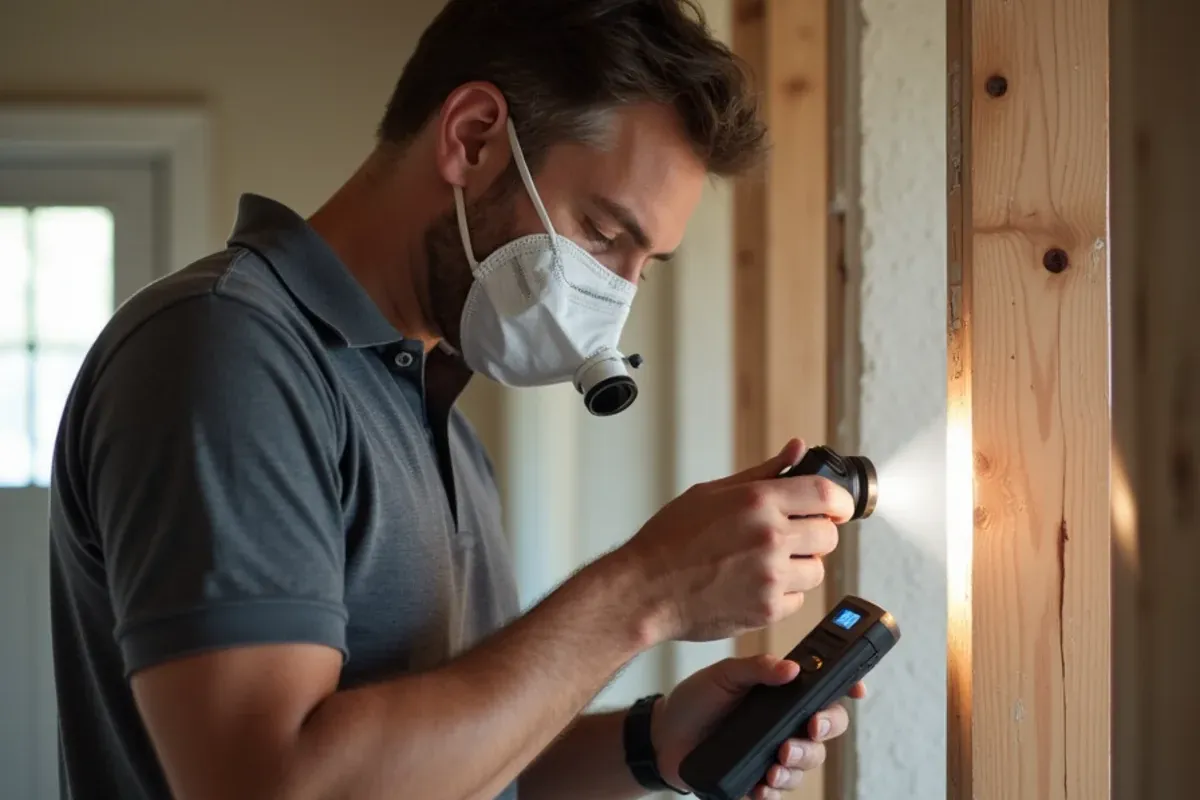
- 1Assessment. The licensed assessor inspects, may take samples, measures the affected area and identifies the moisture source.
- 2Mold remediation protocol. The assessor writes a protocol for that project: the areas to remediate, estimated quantities, methods, containment and protective equipment, and the criteria the job must meet to pass clearance.
- 3Work plan. The licensed remediation contractor writes a work plan describing how it will carry out the protocol at your property, including the containment layout and how occupants are protected.
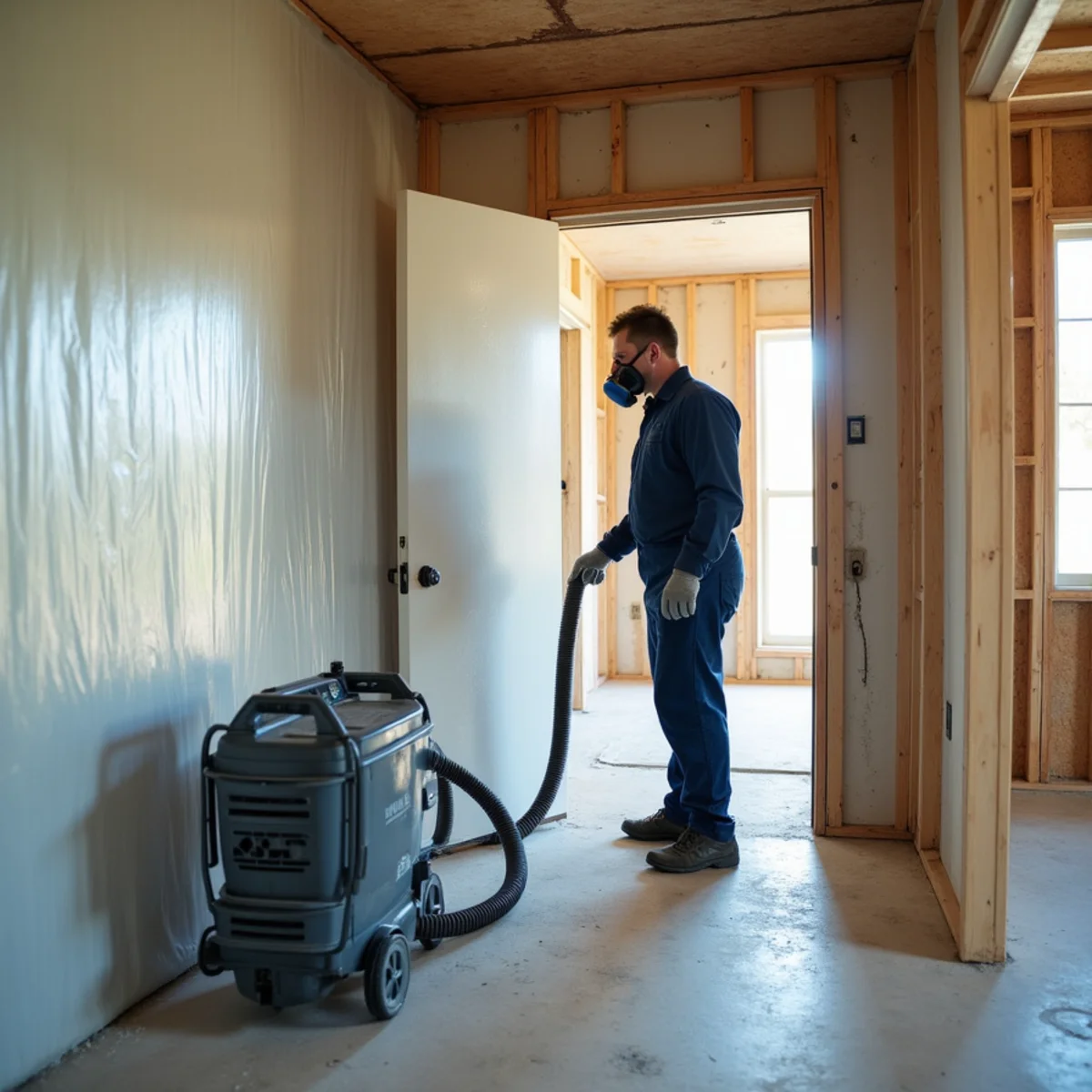
- 4Remediation. The crew builds containment, runs negative air with HEPA filtration, removes mold-damaged drywall and insulation, HEPA-vacuums and cleans the framing, and dries the structure. Antimicrobials follow cleaning; they do not replace removal.
- 5Post-remediation assessment. The assessor returns, inspects inside containment, may sample, and reports whether the project passed clearance.
- 6Certificate. After a passed clearance, the property owner receives a Certificate of Mold Damage Remediation (CMDR) within 10 days.
None of this holds unless the water is fixed. Remediation behind a supply line that still drips, or over a slab that never dried, fails clearance or grows back. That is why wet areas should get water extraction and structural drying quickly, ideally within the 24 to 48 hours the EPA gives for drying wet materials to prevent mold.
Why the Certificate of Mold Damage Remediation matters
The CMDR is the paper proof that a regulated project was done and cleared. Keep it, along with the protocol and clearance report, in your home records.
- Insurance. Texas law limits an insurer’s ability to use previously remediated mold that has a certificate to refuse coverage. Confirm how that applies to your policy with the Texas Department of Insurance (TDI).
- Selling the home. Buyers, inspectors and agents ask about past mold. A certificate with its protocol and clearance report answers with documents instead of assurances.
- Future claims. If a new leak happens, the file shows the earlier problem was dealt with properly.
Unlicensed work, including a homeowner’s own, does not produce a CMDR. On a small job that may be a fair trade. On a large one, the certificate is often worth more than the savings.
Flood water, humidity and the 25-foot line
Mold after a flood is rarely small. When floodwater sits in drywall and insulation for days in Gulf Coast humidity, growth commonly covers whole wall sections, which puts most post-flood mold work well over 25 square feet. Homes near the Brazos in Fort Bend County know this pattern; our Richmond water damage and mold page covers river flooding and cleanup there.
How to check a license before you hire
- 1Ask for the individual and company license numbers of both the assessor and the remediator.
- 2Look each one up on TDLR’s license search and confirm it is active.
- 3Confirm the assessor and the remediator are separate, unrelated companies.
- 4Ask to see the protocol before remediation starts and the clearance report when it ends.
- 5Ask when you will receive the Certificate of Mold Damage Remediation.
Getting remediation started
If you are looking at mold after a leak or flood in the Katy area, start with a licensed assessor, then call (831) 303-1192. We connect you with a TDLR-licensed mold remediation contractor who works from your assessor’s protocol. Every restoration technician we send is licensed where Texas requires it, and insured.
From the job site
Where the rules catch people mid-project
The 25-square-foot line is measured on the contiguous area of mold, and on water-damage jobs that number often changes once walls are open. A spot behind a vanity that looked like eight square feet can turn out to run the length of the wall cavity. When that happens, the job has to shift into the licensed process: an assessor’s protocol, a licensed remediation contractor and a clearance assessment, before work continues.
The other trap is timing. Licensed remediators generally have to notify TDLR at least five days before a project starts, with exceptions for emergencies, and the Certificate of Mold Damage Remediation comes only after the project passes clearance, typically within 10 days. Plan the schedule around those steps rather than discovering them after demolition.
- Stop and call when mold keeps showing up as a wall is opened; do not keep cutting.
- Ask the remediator for their TDLR license number and check it on the TDLR license search.
- Confirm the assessor and the remediator are different, unaffiliated companies.
- Keep the protocol, the work plan, the clearance report and the certificate together; buyers and insurers ask for them.
- Fix the water source first; a certificate means little if the leak comes back.
Related questions
Can the company that tests my home for mold also remove it?
Can the company that tests for mold also remove it?
What happens if a mold remediation fails clearance?
Written by the Hydrosphere Restoration Pros team for homeowners in Katy and nearby communities. General information, not legal, insurance or engineering advice: your policy, the Texas Department of Insurance and licensed professionals have the final word on your situation. Last reviewed September 2026.