
Prevention
Freeze Prep for Katy Homes: Protecting Attic Pipes After February 2021
By Hydrosphere Restoration ProsUpdated 6 min read
The short answer
To prevent frozen pipes in a Texas home, insulate attic and exterior-wall lines, cover hose bibs, open sink cabinets and keep the heat steady during a hard freeze. Drip exterior-wall faucets unless your utility asks you not to. Know your main shut-off, and if a long outage looks likely, shut off and drain the lines first.
What February 2021 taught Katy homeowners
In mid-February 2021, Winter Storm Uri held the Houston area below freezing for several days, with overnight lows in the teens in places. At the same time the state grid shed load, and many homes lost power for long stretches. Without heat, water in pipes that had never frozen before turned to ice.
The damage often showed up at the thaw. As ice melted, water ran through split pipes and cracked fittings in attics and walls, and ceilings came down in homes across the region. For many families the freeze was the warning and the burst pipe was the real loss.
Why Katy homes are vulnerable to freezing
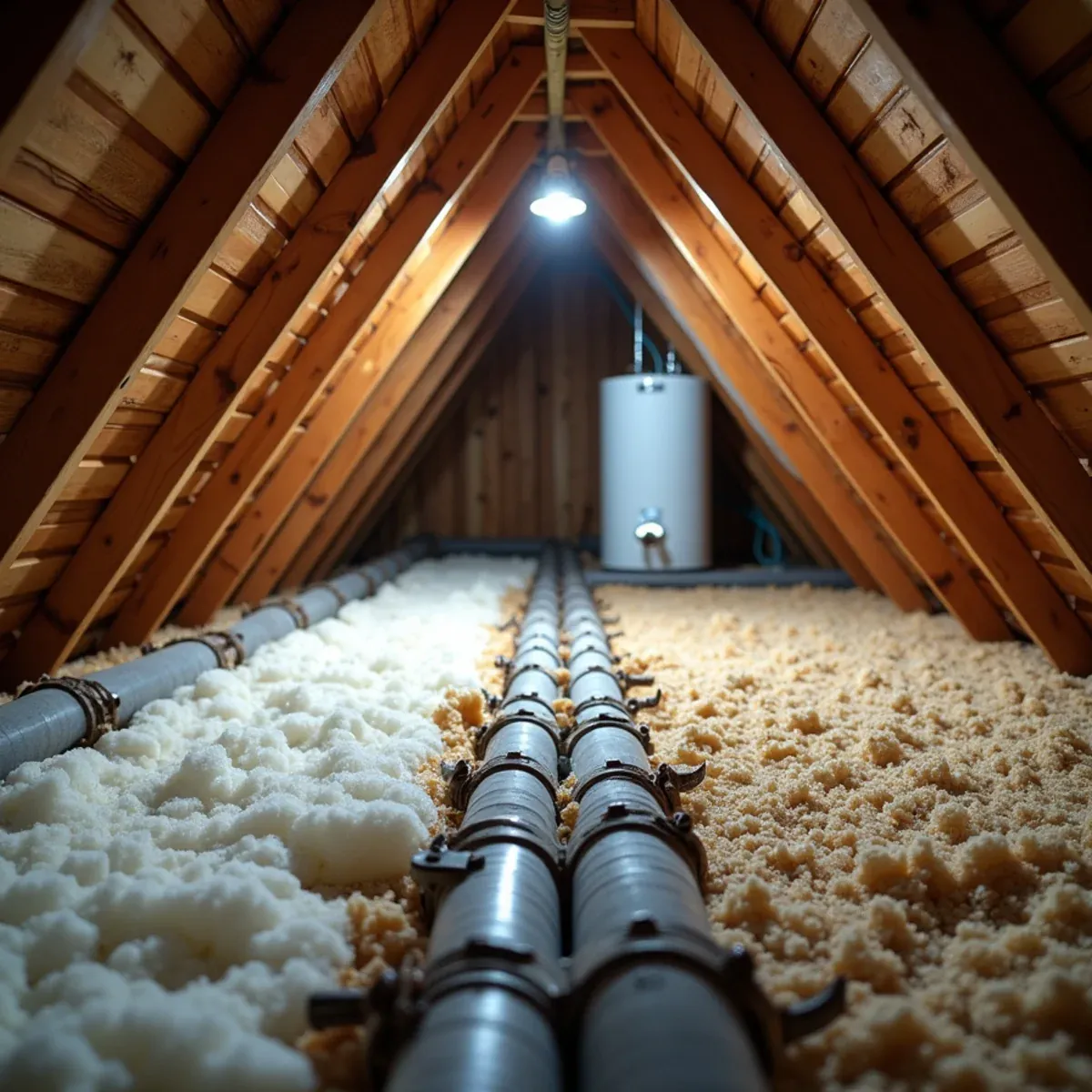
Houses here are built for heat, not cold. Slab-on-grade homes route much of their plumbing overhead, and two-story homes commonly have the water heater, air handler and supply lines in the attic, where the temperature follows the outdoor air.
- Attic supply lines. PEX, CPVC or copper runs over the ceiling and out toward the eaves, where insulation is thinnest. CPVC turns brittle in the cold, and fittings can crack even where flexible PEX tubing survives.
- Exterior-wall kitchens and laundry rooms. Sinks and washer boxes on outside walls have supply lines inside thinly insulated cavities.
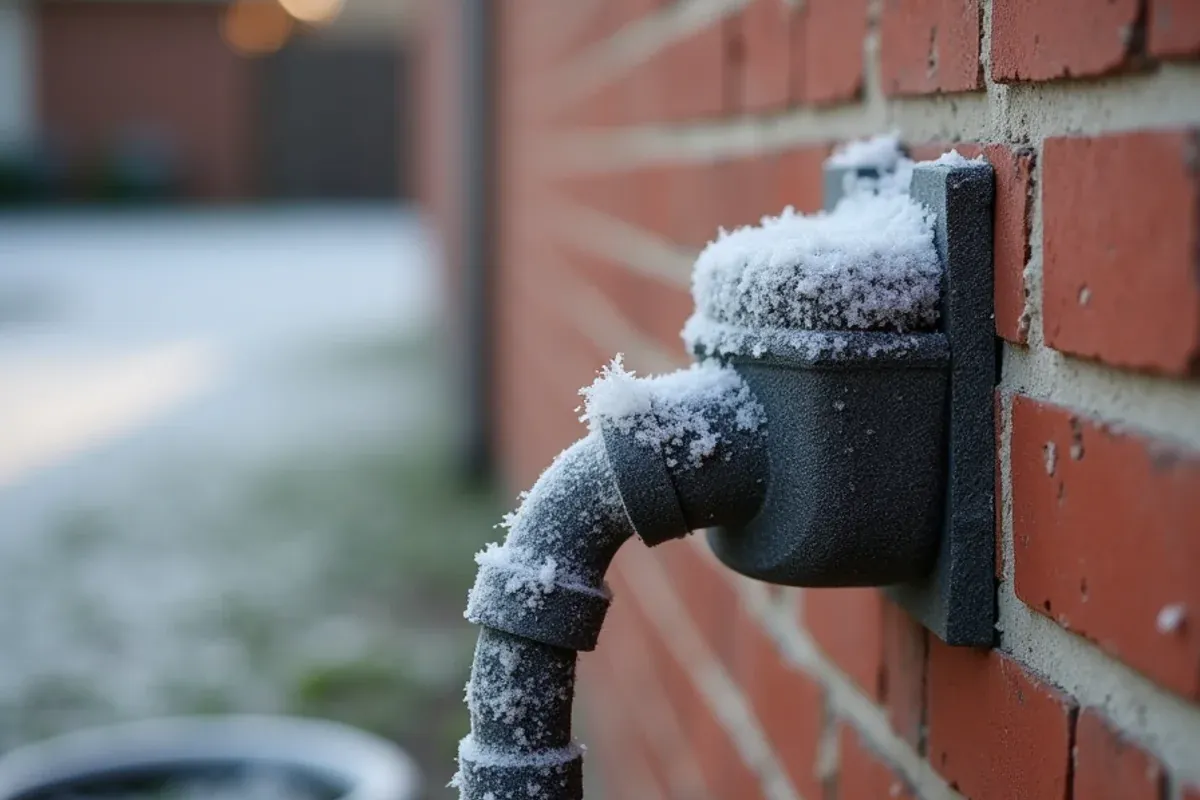
- Hose bibs. A standard outdoor faucet holds water right at the wall.
- Garage water heaters. An unheated garage drops close to the outdoor temperature, and the supply and relief lines go with it.
- Tankless units on exterior walls. They have built-in freeze protection, but it runs on electricity.
- Irrigation backflow preventers. The brass assembly standing beside the house is one of the most common freeze breaks in Texas yards.
Older homes add aging pipe and fittings to that list. Mission Bend, developed from the early 1980s, is a good example; our Mission Bend water damage page covers what tends to fail in those homes.
Freeze prep checklist: before the cold arrives
Find and test your main shut-off
Most Katy-area homes have the main shut-off in the water meter box near the curb. Turning it usually takes a meter key, also called a curb key, sold at hardware stores. Buy one before the forecast turns, open the box, clear out the dirt and make sure the valve moves. Some homes also have a house-side valve in the garage or near a hose bib. Everyone in the household should know where both are.
Insulate and cover
- Wrap exposed attic lines in foam pipe insulation, especially near eaves and gable vents.
- Keep attic insulation on top of the lines, not between the lines and the ceiling, so house heat can reach them.
- Disconnect garden hoses and put a foam cover on every hose bib.
- Insulate the irrigation backflow preventer, or shut off and drain the sprinkler system following its instructions.
- Insulate the lines to a garage water heater and keep the garage door closed.
During the freeze
- Let faucets on exterior walls drip slowly, both hot and cold, unless your water utility asks residents not to drip.
- Open cabinet doors under kitchen and bathroom sinks on outside walls so room air reaches the pipes.
- Keep the thermostat steady day and night; don’t set it back while you sleep or travel. Common guidance is no lower than about 55°F.
- Leave interior doors open so heat reaches back bedrooms and the laundry room.
- Never use open flames, or space heaters, in the attic or against pipes to thaw them.
Tankless water heaters and power outages
A tankless unit on an exterior wall uses small electric heaters to keep water inside it from freezing. When the power goes out, that protection stops. If a long outage looks likely, turn off the gas and the unit’s power, close its water isolation valves and drain it following the manufacturer’s instructions. A cracked heat exchanger is an expensive repair, and some warranties exclude freeze damage.
Drain-down if you leave or lose power
- 1Close the main shut-off at the meter box, or the house-side valve.
- 2Turn off the water heater: gas to off, or an electric heater at its breaker.
- 3Open the highest faucets in the house, then the lowest, including tubs and outdoor faucets, so the lines empty.
- 4Flush each toilet once to empty the tanks.
- 5When you restore water, close the faucets, open the main slowly and walk the house checking for leaks.
Do not turn an electric tank water heater back on until it is completely refilled with water; heating elements burn out when powered dry.
If a pipe bursts when it thaws
- 1Shut off the water at the main right away.
- 2Turn off power to wet areas at the breaker, if you can reach the panel without standing in water.
- 3Keep people out from under a sagging ceiling; water-heavy drywall can drop without warning.
- 4Photograph the break and everything it soaked.
- 5Call a plumber to repair the pipe and a restoration crew to extract the water and dry the structure.
The drying decides whether mold follows. Wet insulation, drywall and the slab under flooring need extraction, moisture mapping, and air movers with dehumidifiers checked daily. Our burst pipe water damage cleanup page covers the full process, including water extraction and structural drying. If water is running right now, use our 24/7 emergency water damage service or call (831) 303-1192.
After a region-wide freeze, every plumber and restoration crew is busy at once. We confirm timing when you call, but on the worst days nobody can promise speed, which is one more reason to prep. If the attic also holds your water heater, our article on attic water heater leaks is worth reading too.
Insurance and frozen pipes
Sudden water damage from a pipe that froze and burst is usually covered by Texas homeowners policies when reasonable care was taken, typically keeping the heat on, or shutting off the water and draining the system. The broken pipe itself may be handled differently from the damage it caused. Check your policy wording and ask your agent. Photos, moisture readings, daily drying logs and an itemized scope help the adjuster; the carrier decides coverage.
Prep once, before the next hard freeze
Most of this list takes an afternoon, a roll of foam insulation and a few hose bib covers. Do it in the fall, not the night the forecast drops. If a pipe does break in your Katy, Cinco Ranch, Fulshear or Mission Bend home, call (831) 303-1192, 24 hours a day. Every restoration technician we send is licensed where Texas requires it, and insured.
From the job site
What February 2021 taught us about Katy plumbing
Most Houston-area homes run their water lines through a vented attic, which is the coldest part of the house in a freeze and the hardest place to reach when something splits. During Winter Storm Uri, the calls did not peak during the coldest nights. They peaked at the thaw, when ice that had split a fitting melted and the line started running into the ceiling, often while the family was staying somewhere warmer.
Dripping advice also changed. In January 2026, with a winter storm coming, the City of Houston asked residents not to drip faucets, to protect water pressure and avoid boil-water notices. Its advice was to shut off and drain the main instead. Katy, Fulshear and the MUDs around them set their own guidance, so check yours before a freeze.
- PEX tubing resists splitting better than copper or CPVC, but its fittings and the valves around it still fail.
- Walk the ceilings under attic lines and the walls behind exterior-wall sinks when the thaw starts, not just during the freeze.
- A tankless water heater on an exterior wall has freeze protection only while it has power; drain it if an outage is likely.
- Irrigation backflow preventers and pool equipment freeze early; drain or wrap them before the first hard freeze.
- Leave the house with the main off and lines drained if you are leaving during an outage.
Related questions
Should I drip my faucets during a freeze in Texas?
What temperature should I keep my house during a freeze?
Will insurance cover a pipe that burst while I was away?
Written by the Hydrosphere Restoration Pros team for homeowners in Katy and nearby communities. General information, not legal, insurance or engineering advice: your policy, the Texas Department of Insurance and licensed professionals have the final word on your situation. Last reviewed September 2026.