
Leaks
Attic Water Heater Leaks: Why Katy Ceilings Come Down and What to Do
By Hydrosphere Restoration ProsUpdated 6 min read
The short answer
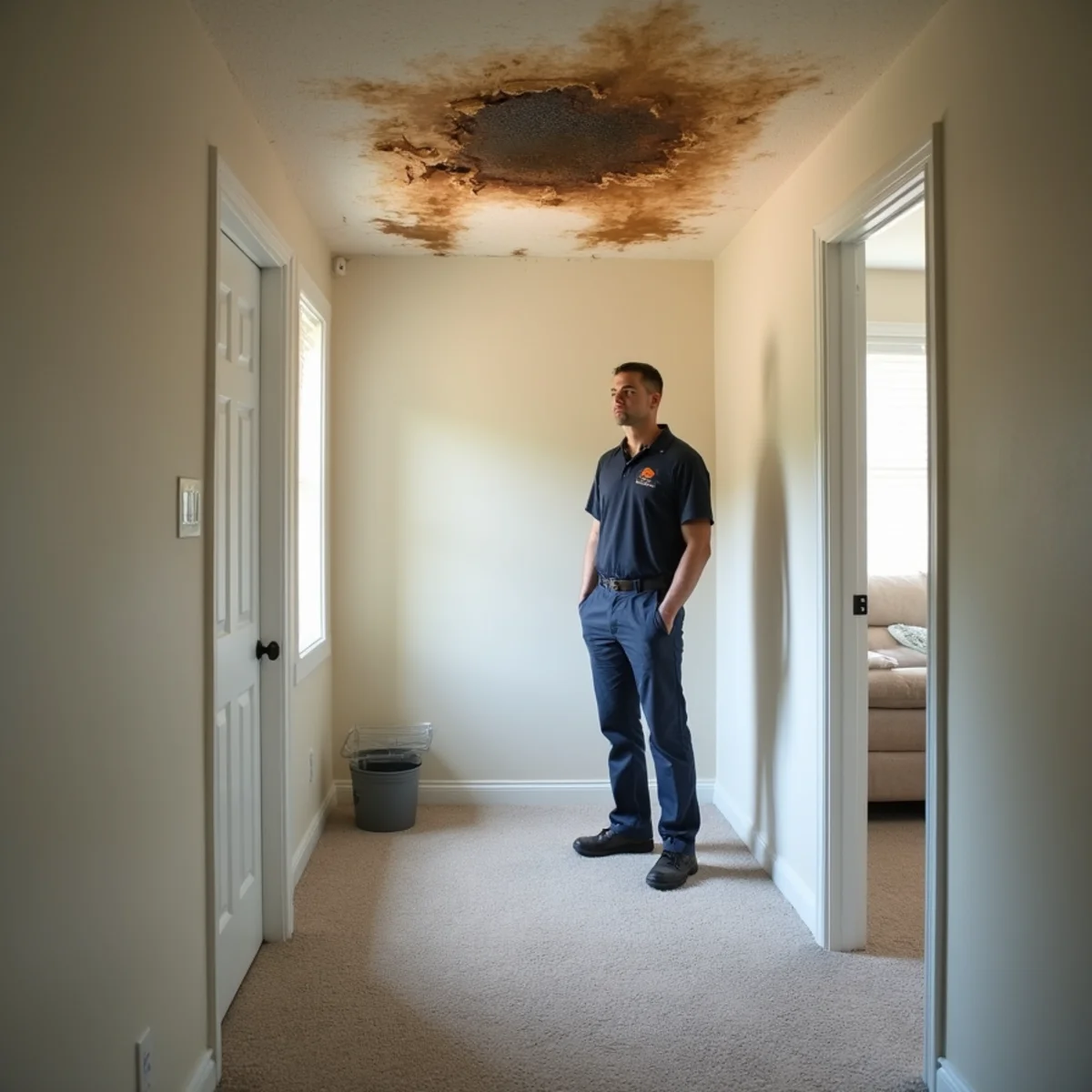
When an attic water heater leaks, water fills the drain pan until it overflows or the pan drain clogs, then soaks the insulation and ceiling drywall and comes through the room below. Stay out from under a sagging ceiling, close the cold-water valve on the heater, turn off the gas or breaker, and call a restoration crew.
Why So Many Katy Water Heaters Live in the Attic
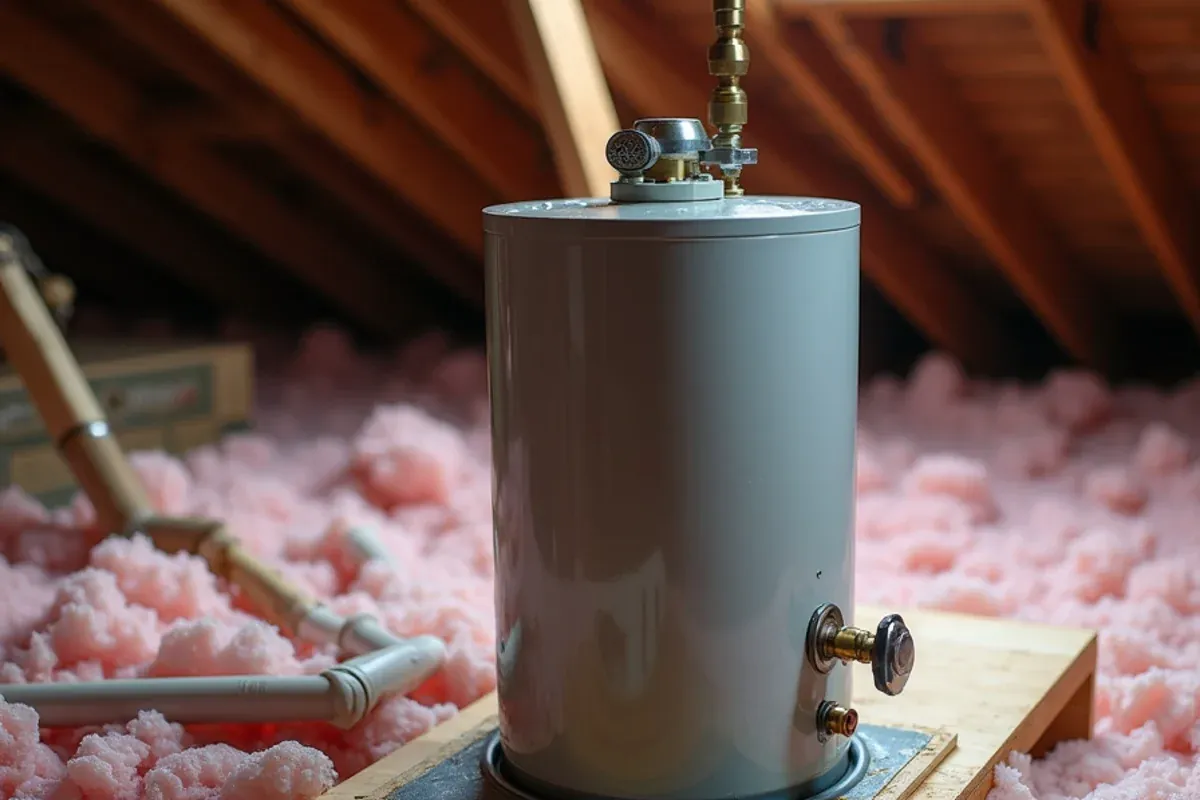
Builders around Katy put water heaters in the attic for practical reasons. Homes here sit on slab-on-grade foundations with no basement, and garage and closet space is valuable, so the attic becomes the mechanical room. In many two-story homes it also holds the air handler, its condensate pan and a run of supply lines.
The trade-off is gravity. When an attic tank fails, the water has nowhere to go but down: through the insulation, through the upstairs ceiling and, given time, into the walls and ceiling of the first floor. A leak that would have wet a garage floor now involves two stories.
How a Small Leak Becomes a Ceiling Failure
Tank water heaters typically last about 8 to 12 years. Over that time sediment from hard water settles on the bottom of the tank, the anode rod wears away and the steel starts to corrode from the inside. Fittings on the inlet and outlet lines can also weep or crack.
Building codes generally call for a drain pan under an attic heater, with a drain line running to the outside or to a drain. The pan only works if that line stays clear. A pan drain clogged with sediment or debris, a line that was never connected or a cracked pan will overflow into the attic.
The temperature and pressure relief (T&P) valve is another source. It opens when pressure or temperature climbs too high, and its discharge line should run to an approved spot. A T&P valve that drips over and over is a sign of a pressure problem or a failing valve.
Once water gets past the pan, blown-in insulation soaks it up like a sponge. The drywall below takes on weight, softens and eventually sags or tears.
Warning Signs to Watch For
- A brown or yellow stain on the upstairs ceiling, often near the attic access or in a hallway
- Water dripping from a ceiling light fixture, smoke detector or vent
- Drywall that bulges, sags or shows cracks spreading from a seam
- Water running from the pan drain outlet on an exterior wall or soffit when no one is using hot water
- Rust around the base of the tank or in the pan
- Popping or rumbling from the heater, a sign of heavy sediment
- Less hot water than usual, or rust-colored hot water
What to Do Right Now
- 1Stay out from under a sagging ceiling. Wet drywall is heavy and can drop without warning. Close the room and keep kids and pets out.
- 2Cut power to the fixtures in that area at the breaker panel, if the panel is dry and you can reach it safely. Water in a light fixture is an electrical hazard.
- 3Put a bucket or tote under active drips you can reach from a safe spot, and lay towels or plastic to protect the floor.
- 4Close the cold-water inlet valve on top of the water heater if you can get into the attic safely. Then turn the gas control to off, or switch off the heater’s breaker if it’s electric.
- 5Shut off the house water if you can’t reach the heater. Attic ladders, heat and loose insulation make a rushed attic trip risky, so walk only on decking or joists.
- 6Take photos of the ceiling, the attic, the heater and the pan.
- 7Call a restoration crew and a plumber. The plumber repairs or replaces the heater; the restoration crew dries the house.
Should you poke a hole in the ceiling?
You may read advice to puncture a bulging ceiling so it drains into a bucket. Trained technicians sometimes do this in a controlled way, but for a homeowner it can bring a section of soaked drywall and wet insulation down on top of you. The better move is to keep clear, catch the drips you can reach safely and let the crew handle the rest.
What the Restoration Crew Does
The crew starts in the attic and works down. They confirm the category of water, then use moisture meters and a thermal camera to map how far it spread across the ceiling, into wall cavities and onto the first floor.
- Attic: wet blown-in insulation is usually removed and bagged, because it compacts and holds water. Decking and framing get dried.
- Upstairs ceiling: sagging or saturated drywall is cut out; firm drywall with lower readings may be dried in place.
- Walls: baseboards come off, and small holes or flood cuts let air reach wet studs and insulation.
- First floor: if water made it downstairs, that ceiling, those walls and the flooring get the same mapping and drying.
- Drying: air movers, LGR dehumidifiers and daily readings until materials reach a dry standard, following the IICRC S500 standard for water damage.
It’s the same process described on our burst pipe and leak water damage page, and it relies on the water extraction and structural drying equipment used on every water loss. You get photos, readings and an itemized scope for your insurer.
Cinco Ranch and Other Two-Story Neighborhoods
Much of Cinco Ranch was built from the 1990s onward, so many homes there are on their second or third attic water heater, and the original pans, fittings and drain lines are now decades old. The same pattern shows up across 2000s subdivisions around Katy, from homes off Mason Rd to neighborhoods near the Grand Parkway.
If your heater is near the end of its typical life, or you don’t know how old it is, check the manufacture date on the label and look at the pan the next time you’re up there.
How to Prevent the Next Attic Leak
- Test the pan drain. Pour a little water into the pan and confirm it runs out the exterior outlet.
- Add a float switch or leak sensor. A sensor in the pan paired with an automatic shut-off valve on the cold inlet can stop the water before the pan overflows.
- Flush the tank once a year, or as the manufacturer recommends, to clear sediment.
- Have a plumber check the anode rod and T&P valve as the heater ages.
- Plan the replacement once the tank reaches the 8 to 12-year range instead of waiting for it to fail.
- Know where your valves are: the cold inlet at the heater, the gas control or breaker and the house shut-off.
A plumber handles the heater itself. Our side of the job is the water that got out.
If Your Ceiling Is Already Wet
An attic water heater leak moves fast once the pan overflows, and every hour pushes water deeper into insulation, drywall and the floor below. If you see a stain spreading or a fixture dripping, stay clear of the ceiling, shut off the heater and call Hydrosphere Restoration Pros at (831) 303-1192. We answer 24/7 and send an insured crew to dry both floors.
From the job site
What the drain pan can and can’t do
The International Residential Code, which Katy-area cities adopt with local amendments, calls for a pan under a water heater installed where a leak would cause damage, at least 1½ inches deep and drained through a pipe at least ¾ inch in diameter to a safe spot. That pan is built to catch a weeping fitting or a dripping relief valve. It was never meant to hold the contents of a tank that splits, and a pan drain half-full of dirt or wasp nests will not carry even a slow drip.
By the time a yellow stain shows on the ceiling below, water has usually already spread across the drywall, pooled between joists and soaked the blown-in insulation around the platform. That insulation holds water against the framing and is removed rather than dried.
- Pour a gallon of water into the pan once a year and watch that it drains outside; a slow pan drain is the most common reason pans overflow.
- Look for rust streaks down the tank, crusty fittings or a damp platform; those usually come before a failure.
- A leak sensor in the pan, or an automatic shut-off valve on the cold line, turns a flood into a service call.
- Many tanks in the Houston area are replaced somewhere around 8 to 12 years; hard water and a skipped anode rod shorten that.
- After a leak, ask the crew to check the upstairs subfloor and the first-floor ceiling, not just the room right under the heater.
Related questions
Does homeowners insurance cover an attic water heater leak?
Can a wet ceiling be dried instead of replaced?
Who fixes the water heater, a plumber or the restoration crew?
Written by the Hydrosphere Restoration Pros team for homeowners in Katy and nearby communities. General information, not legal, insurance or engineering advice: your policy, the Texas Department of Insurance and licensed professionals have the final word on your situation. Last reviewed September 2026.