
Emergency
What to Do in the First Hour After Water Damage (Before Help Arrives)
By Hydrosphere Restoration ProsUpdated 7 min read
The short answer
In the first hour after water damage, get people away from wet outlets and sagging ceilings, stop the water at the fixture valve or the main shut-off, and switch off power to wet rooms only if the panel is dry. Photograph everything before you move it, lift valuables off wet floors, and call a restoration crew.
Minutes 0 to 5: Make the House Safe First
Water and electricity often end up on the same floor during a leak. If water is near outlets, a power strip, a floor lamp or the breaker panel, stay out of it. No laptop is worth wading into a flooded room.
Look up before you walk in. A ceiling that bulges, sags or drips from a light fixture is holding water it can drop all at once, which happens a lot in two-story Katy homes with plumbing in the attic. Keep people and pets out of that room.
- Wet breaker panel or water near outlets: stay dry and leave the panel to the electric utility or an electrician.
- Sagging or bulging ceiling: close the door to that room and keep everyone out from under it.
- Sewage, floodwater or a smell of gas: get out, and call the gas utility from outside if you smell gas. Floodwater and sewage are Category 3 water, which carries bacteria you don’t want on your skin or in your lungs.
- Clean water from a supply line with no electrical risk: move on to the next step.
Minutes 5 to 15: Stop the Water
Start at the source. Most fixtures have their own valve: behind the toilet, under the sink, behind the washer and behind the refrigerator. Turn it clockwise until it stops.
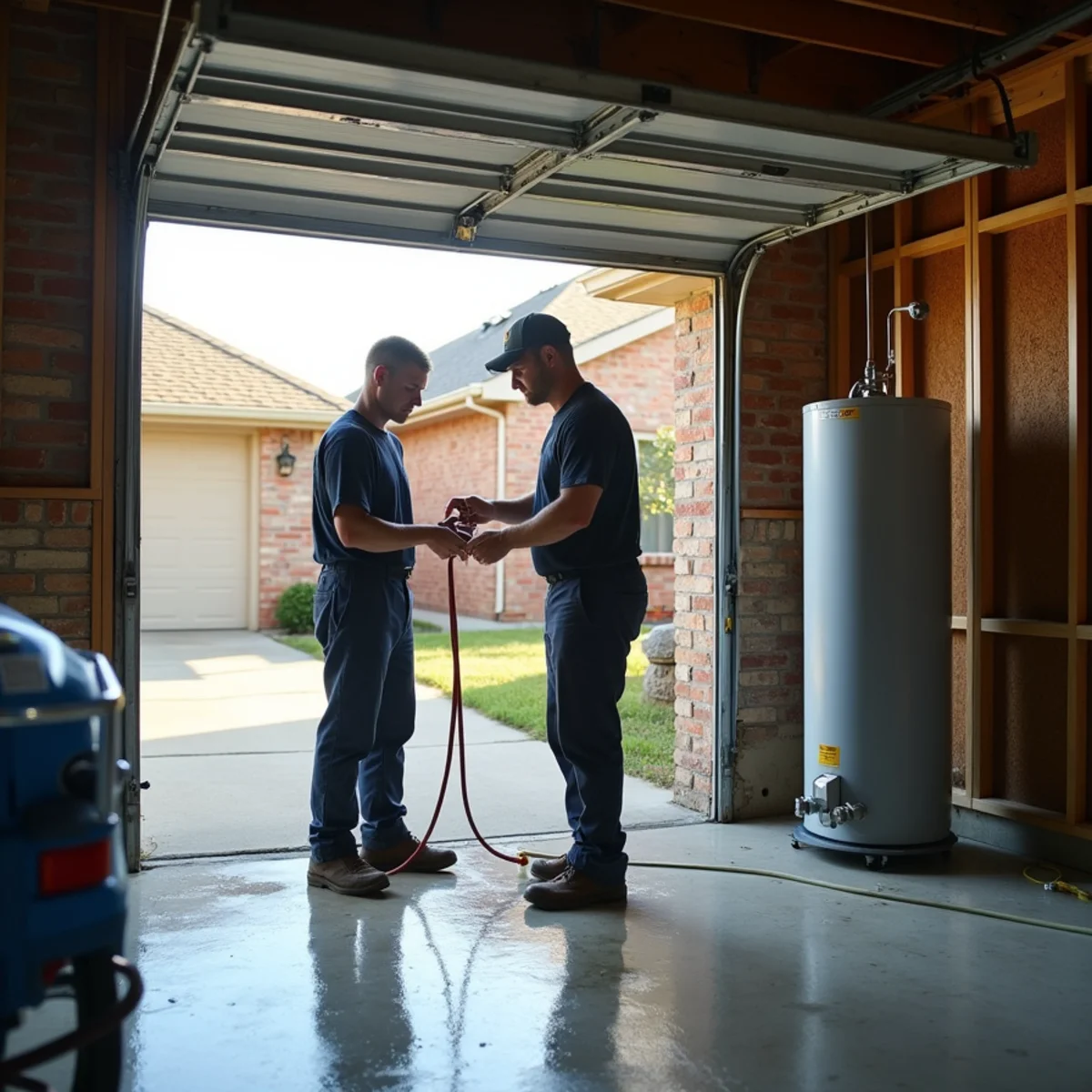
If the leak is at the water heater, close the cold-water inlet valve on top of the tank, then set the gas control to off or switch off its breaker. If you can’t find or reach a local valve, shut off the whole house. In many Katy-area homes the house valve is in the garage or where the line enters the house, and the utility valve sits in the meter box near the curb, which usually needs a meter key.
With the main off, open a faucet on the lowest floor to relieve pressure in the lines. Our page on burst pipe and leak water damage covers where these valves tend to hide.
Renting? Stop the water first and call your landlord or property manager second. The water keeps moving while you wait for a call back.
Minutes 15 to 30: Photograph Before You Move Anything
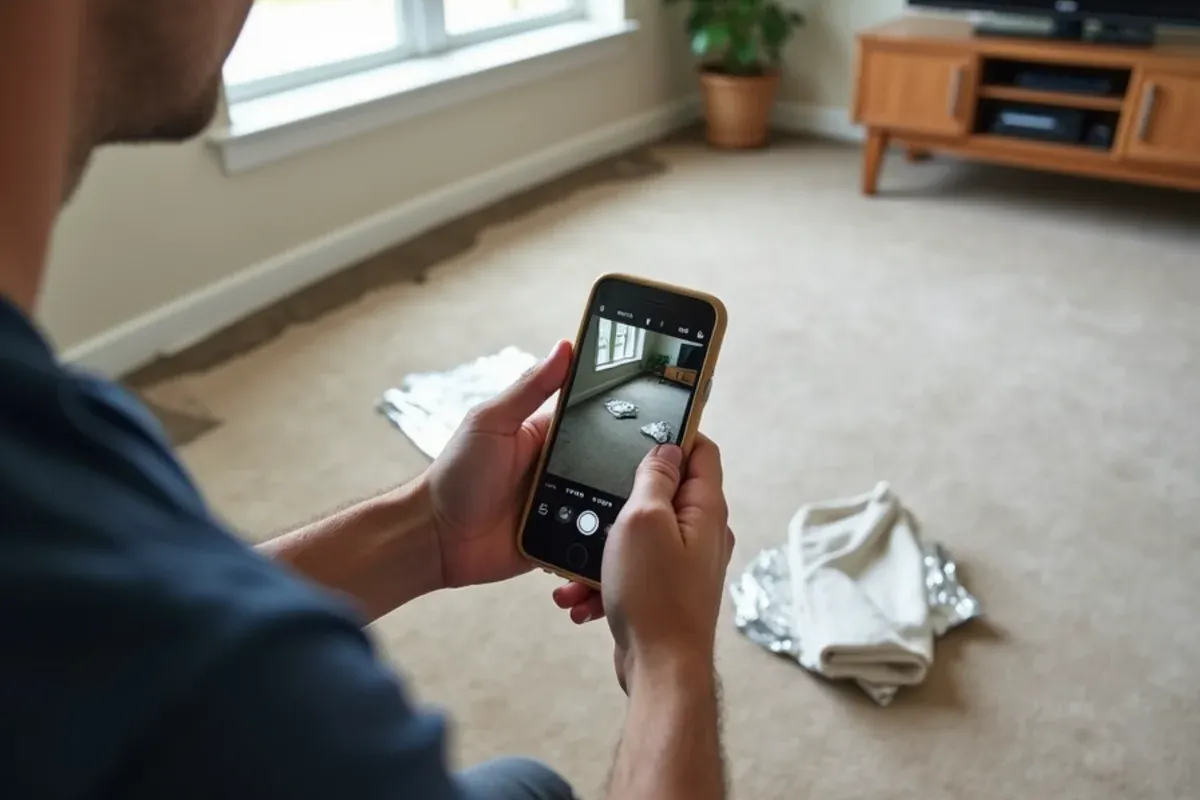
Your insurer will want to see the loss the way it happened. Take wide shots of every wet room from the doorway, then close-ups. It takes ten minutes, and it’s the one step you can’t go back and redo later.
- The source: the split line, the failed fitting, the overflowing pan or the drip point in the ceiling
- The water line on walls, cabinets and furniture legs
- Wet flooring from several angles, including under rugs
- Damaged belongings, with model and serial numbers for electronics and appliances
- A short video walking room to room while you describe what you see
Don’t throw anything away yet, even items that are clearly ruined. An adjuster may want to see them, or at least clear photos of them.
Minutes 30 to 45: Protect What You Can
Once the water is off and the photos are done, limit the spread. Move electronics, paperwork, family photos and anything that wicks water (books, fabric, cardboard boxes) to a dry room. Slide foil or plastic lids under wooden furniture legs so stain doesn’t bleed into the carpet.
Pick up area rugs if they come up easily. Towel or mop hard floors where the water is shallow and clean. Wet carpet and pad are heavier than they look, so leave pulling carpet to the crew.
Resist the urge to open every window. In a Katy summer the outdoor air is often wetter than the air inside, and pulling it in slows drying. On a clean-water leak, keep the air conditioning running so it removes moisture, unless water reached the air handler or ductwork.
Minutes 45 to 60: Make the Right Calls
When water is still spreading, call a restoration company first and your insurer right after. Most policies expect you to take reasonable steps to prevent further damage, and getting the water out is exactly that. Our 24/7 emergency water damage line answers at any hour, and we confirm timing when you call.
- 1Restoration crew: describe the source, how many rooms are wet, whether a ceiling is involved and whether the water is clean, gray or sewage.
- 2Insurance company: report the loss and write down the claim number and the adjuster’s name.
- 3Plumber: if a pipe, water heater or drain failed, fixing the plumbing is a separate job from drying the house.
Keep a simple log on your phone: the time of each call, who you spoke with and what they said. It saves a lot of back-and-forth later.
What Not to Do in the First Hour
- Don’t use a household vacuum on standing water. It’s a shock hazard, and it won’t pull water out of the pad.
- Don’t turn on ceiling fans or lights in a room with a wet ceiling.
- Don’t run the HVAC if sewage or floodwater reached the return, the air handler or the ducts.
- Don’t pull up flooring or cut drywall before it’s photographed and measured.
- Don’t pour bleach on anything. Cleaning comes after water removal, and bleach does nothing for wet drywall.
- Don’t assume a room will air out. Wet drywall and carpet pad can start growing mold within 24 to 48 hours in Gulf Coast humidity.
What Happens When the Crew Arrives
The technicians start with the same safety check you did, then confirm the water category. Category 1 clean water, Category 2 gray water and Category 3 black water are handled differently under the IICRC S500 standard the industry follows.
Next comes moisture mapping. A moisture meter and a thermal camera show how far the water traveled under flooring, behind baseboards and up the drywall, which is usually farther than the visible stain. Then the water extraction and structural drying begins: truck-mounted or portable extraction, air movers aimed along the walls, LGR dehumidifiers and readings every day until materials reach a dry standard.
You should receive photos, moisture readings and an itemized scope of work. Every restoration technician we send is licensed where Texas requires it, and insured.
Two-Story Homes in Cinco Ranch and Nearby
Many homes around Katy built in the 1990s and 2000s put the water heater, air handler and supply lines in the attic. When one of those fails, water comes through the upstairs ceiling first, then finds the first floor through wall cavities and light fixtures. That’s why the first step above starts with looking up.
If you live in a two-story home in Cinco Ranch, Grand Lakes or Seven Meadows, find your attic heater’s cold inlet valve and your house shut-off today, while nothing is leaking. A two-minute walk-through now saves a lot of water later.
Call Before the Water Moves Further
The first hour comes down to four jobs: stay safe, stop the water, document it and get drying started. Everything after goes faster when those are done well. If water is spreading in your Katy-area home right now, call Hydrosphere Restoration Pros at (831) 303-1192. We answer 24/7 and dispatch an insured restoration crew.
From the job site
What we see go wrong in the first hour
The costliest first-hour mistake is waiting to see whether it dries. A clean supply-line leak left overnight in a Katy summer soaks the pad, climbs the drywall and can start turning into gray water by the time anyone calls, and that changes what can be saved. A day of towels and box fans rarely beats one visit with an extractor and a moisture meter.
The second mistake is protecting the wrong things. Wood furniture legs and rugs sitting in water bleed stain into carpet within hours, and upholstered pieces wick water up into the frame where nobody sees it.
- Set furniture legs on foil squares, plastic lids or wood blocks, not on towels that stay wet.
- Pull area rugs off wet wall-to-wall carpet right away; the dyes transfer fast.
- If the main in the curb meter box needs a meter key you do not have, look for a house-side valve near the water heater or in the garage.
- For a clean-water leak, keep the AC running if the unit and ducts are dry; it pulls humidity out of the house. Turn it off if the water came from a toilet, drain or outside.
- Keep the failed part, such as the split hose or cracked supply line, for the adjuster.
Related questions
What should I tell my insurer when I report the claim on day one?
Can I dry wet carpet myself with fans?
Is it safe to stay in the house after water damage?
Written by the Hydrosphere Restoration Pros team for homeowners in Katy and nearby communities. General information, not legal, insurance or engineering advice: your policy, the Texas Department of Insurance and licensed professionals have the final word on your situation. Last reviewed September 2026.